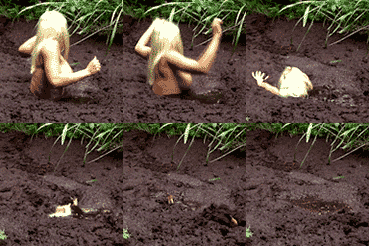
bart1997 wrote:Well, okay, regarding that possible pond you are both probably right. Although i find my idea more appealing
How do "sedge mats" do look like? I thought these are quite larger plants requiring a bit of solid ground. All this quaking and shaking i do only encounter with areas of peat moss only.
Sedges, basically marsh grass or sawgrass, can spread over top of mud, forming a mat/carpet. They can be a bit of a problem in that they can cover up some wonderful mud, making it no longer accessible.
 But, they can also cover the shallow part of the mud, allowing easy access to deeper softer stuff further out!
 << Moderator Edit >>
The rest of Boggyman's explanation was full of direct references to specific producer product. It can be viewed here viewtopic.php?f=7&t=3553